
Art Therapy: Even for the Less Creative
- Dana Judkevitch
- Nov 12, 2025
- 2 min read
Many people think that art therapy is only for the “artistic”—those who know how to draw, sculpt, or at least keep a sketchbook at home. But the truth? It doesn’t have to be that way at all.
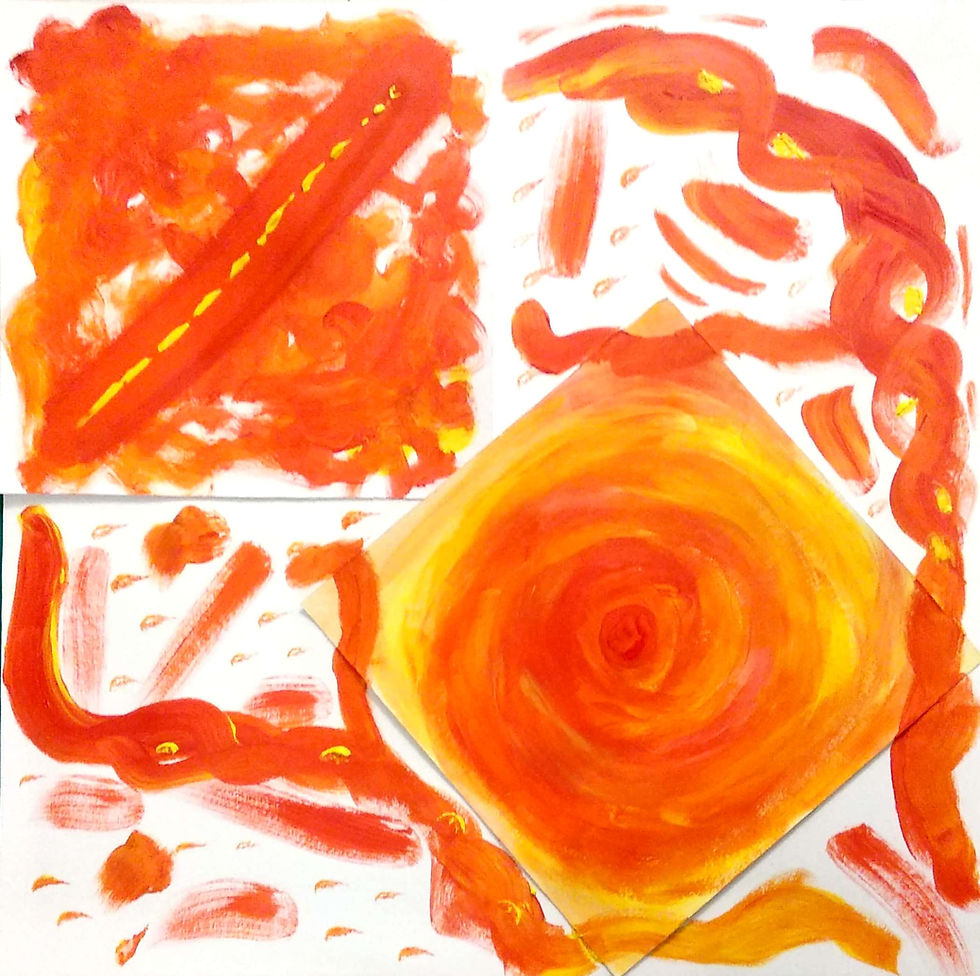
To benefit from art therapy, you don’t need talent, prior experience, or any previous knowledge.
What do you need? Just a few simple things that can make a big difference:
1. An open mind
Art therapy is a relatively young method; it emerged in the U.S. in the 1980s and continues to evolve today. Its greatest advantage is flexibility: there’s no single formula, no one “right” way to do it.
Creating through art allows us to explore, play, and sometimes – just be. You don’t need to be perfect; here it’s okay to go outside the lines, and sometimes it’s even recommended.
2. Leave perfectionism at the door
If you grew up with a clear idea of what “counts” as art, it’s time to let it go.
Art therapy isn’t about aesthetics; it’s about authenticity.
Your drawing doesn’t need to be beautiful. The page can stay messy, unfinished, or even visually unclear.
And sometimes, it’s within that chaos that something deep emerges.
When we try to control the outcome, polish it, or make it “pretty,” we might drift away from the inner parts of ourselves that need to be expressed.
Perfection isn’t the goal here – it’s a wall. Art helps us gently dismantle it.
3. Connect with your inner child
At some point, we learn “how to be adults”: serious clothing, less room for play, less spontaneity, less “silliness.”
But in therapy (especially art therapy), the voice of our inner child gets an important space.
Our inner children know how to express emotions simply, honestly, and without filters. Letting them out isn’t regression – it’s a way to reconnect with our essence.
Something about unbounded, spontaneous, free creation can open doors that words alone cannot.
That’s it – that’s all you need.
What about materials?
When we work together (in the clinic or online), there’s no need for expensive or fancy supplies. You can start with whatever you have at home: pen, pencil, simple paints, newspaper clippings.
If you want to experiment, here are some simple materials you can start with:
Basic materials (optional):
Sketching pencils: B6, HB, H4
Small watercolor palette (even kids’ sets are perfect)
Pen
Pastels or chalks
Colored markers
Old magazines for collage
Glue stick or liquid white glue
Any pen or writing tool you like
You can also work digitally: tablet, drawing apps, or even very simple software.
What matters is connection – not technique.
In short:
You don’t need to know how to draw, be an artist, or feel creative.
All that’s required is:
An open mind
Willingness to let go of “perfection”
A little courage to meet yourself – without filters
And that’s enough.
And greetings from Georgia! :)


Comments